The Reluctant Communicator

reluctant communicator

Once upon a time, there was a girl who created a list.  This list wasn’t any ordinary list. This list was full of future perfect thinking.

Every line on this list described the qualities she wanted in her husband.  She described absolutes, hopes, and day dreams of what her husband would be like.  Some things were necessities like having a growing relationship with God, actively serving in some ministry, and being full of integrity.  Others were more sigh-inducing like having strong hands and being taller than her six-foot frame.

This girl had spent 24 years waiting on her future husband so she was confident about the things on her list.  She was also certain about the qualities she wanted to avoid. One of those things was a bad communicator.  She had witnessed the pitfalls and pain of mis communication in relationships and deeply wanted to avoid those trials.

When she met her tall youth pastor (with strong hands!), she was pleased at his communication skills.  He didn’t shy away from tough topics and was willing to spend a date night talking over coffee instead of hitting the movie theatre.  Her heart was swollen with delight that God had given her a communicative man who fit her list.

The girl and her man got married. Soon the girl realized that even with a good communicator boyfriend/fiance/husband, the two weren’t immune to communication issues.  What this girl hadn’t anticipated was her own struggles with communication and what effects they would have on the beginnings of her marriage.

~~~

Yup, that girl is me.

One of the most oft repeated pieces of marital advice I received was to “communicate, communicate, communicate!”. Despite being an English major who felt pretty confident in my ability to articulate opinions and beliefs, being single had left my relationship communication skills untested for a quarter century. In my focus on someone else’s qualities, I neglected to examine if I had some of those qualities.  Turns out, my communication skills had much room for improvement.

While Tim and I don’t have trouble talking, communicating is a different creature – one that I seemed to shy away from entirely.

I’m what you would call a reluctant communicator.

When faced with uncomfortable feelings, I withdraw. I don’t like to verbalize embarrassing emotions or express needs. Those things may create conflict and I have an extreme aversion to conflict. Not a realistic or healthy attitude for any relationship…

My sorry tactic for conflict avoidance is to have conversations with myself, processing internally. As a result, I leave Tim in the dust wondering why I’m upset or how I’ve arrived at certain conclusions. My journal gets more conversation time than my husband sometimes.

Here are two habits I’ve tried to adopt to combat my communication reluctance:

  1. Include your husband when you process. I will always be an internal processor, but that doesn’t mean I have to exclude my husband.  Once I’ve had some time to think, I try to reiterate my train of thought to Tim.  Not only does Tim gives valuable feedback, often hearing my thoughts out loud brings a whole new dimension to my though processes.  Even if you’re processing something potentially conflict producing, sharing where you’re at and how you arrived at those thoughts and feelings does more for a relationship than resolving the issue internally.
  2. Share your heart with your husband first. As a blogger who values transparency, my posts are very real and very indicative of what’s currently in my heart.  It’s easier for me to articulate with pen and paper so writing is my communication style of choice and is often where I turn first.  I need to share the inner workings of Emily Gardner with Tim before I share it with the blogosphere.  Husbands commit their lives, hearts, and bodies to us, and we should show that commitment respect by giving them first dibs on our hearts, lives, and bodies.


Those two habits are habits – they don’t come naturally to me and I don’t always succeed. However, the fruit born from these habits is oh so sweet. Important details of doing life with someone can easily be glazed over when you’re a reluctant communicator.  I don’t want to miss out on sharing myself with Tim because I was reluctant to speak up and let him into my life.

~~~

Don’t miss out on what Kayse, Monica, Jamie, and Kelly have to say about communication!

Check out the other posts in this series: ServiceLaughter. Sex

5 Essential Earrings Every Girl Should Own

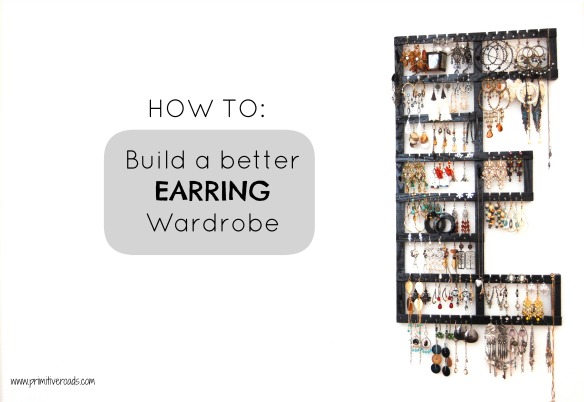
earringsI didn’t get the nickname “Twiga” (twee-ga) for nothing.  Twiga means giraffe in Swahili.  I’m six-feet tall and I DO have a long neck.  But, that long neck has afforded me plenty of space to display my favorite jewelry – earrings.

Aside from my wedding ring, I don’t wear much jewelry, except earrings.  They are my accessory of choice and, as you can see from the display above, I have plenty to choose from.

My earring collection wasn’t built in a day.  I bought, I thrifted, and people gifted until I exceeded the amazing wooden display my step-dad made. After years of collecting, wearing, and even giving away some of those earrings, I noticed a few of these ear adornments were getting extra wear.

These were the earrings I could accidentally fall asleep wearing and have them match my outfit the next day.  These were the earrings I would consistently pack for vacation.  These were the earrings I would search the sidewalk like a crazy person for if I lost one.

Even if you’re not an earring fanatic, like moi, these are the 5 essential earrings every girl should own (assuming that you like and wear earrings, of course…) and a few fun extras.

5 Essential Earrings Every Girl Should Own

Studs1. Studs: Classic. Simple. Chic. They can be anything from diamonds, a birthstone, or pearls.  My current favorites are opals (above), plain silver spheres, and tiny pyramids of aurora borealis.

hoops2. Hoops: No matter the size or color, hoops are a polished way to accessorize any outfit. I love how there are enough shapes to fit anyone’s personality.  Big hoops are bold and statement-making.  Small hoops are delicate and demure.  I wore out a pair of average sized (1 1/2″) silver hoops and opted for chrome colored tear-drop hoops (above).

neutrals3. Neutrals: You really only need one neutral pair, but I like having one in a warm tone and one in a cool tone.  Warm tones like wood, gold, pearl, or brown and cooler tones like silver or black go with everything.  When the colors are neutral you can concentrate on getting silhouette that reflect your personal style.

color4. Color: Take a gander at your closet.  What color do you see the most?  (For me, that’s blue or black). Get a pair of earrings that are predominantly that color.  Choose whatever style you like best.  Bonus points: Look at a color wheel and find a pair in a complimentary color (opposite side of the wheel).  I enjoy the bright pop of coral or soft orange when I’m wearing blue…

fancy5. Fancy: Even if you don’t dress up a ton, every girl should have a pair of fancy earrings.  I tend to go for the dangly variety, but simple is beautiful too.  Choose diamonds or pearls, something that speaks of opulence (even if it’s fake!).

extrasIf you’re getting enthusiastic about earrings and want to expand your collection, start with long earrings and seasonal earrings.

Unless you’re a Twiga, too, your long will be different than my long, but I can’t get enough of the thin, dangly variety.

Seasonal can be cheesy, but it is possible to find lovely reminders of Christmas or Valentines for your ears.  Try a holiday word (like Joy above) or a simple heart/snowflake/four leaf clover.

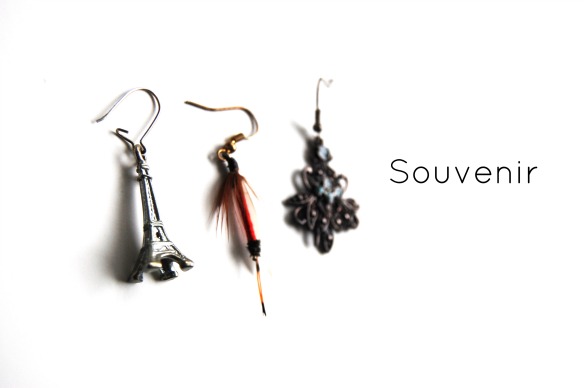
travelI travel quite a bit and instead of buying souvenirs of the tchotchke variety, I’ve taken to picking up some earrings when I visit someplace new.  I remember climbing all the stairs to the top of the Eiffel Tower, working alongside the Samburu in Kenya, and learning how to mix concrete in Serbia just by wearing a certain pair of earrings.

//pagead2.googlesyndication.com/pagead/js/adsbygoogle.js //

How Community Changed My Life

Despite her petite frame, I was a bit intimidated by Lindsay when we first met a few months ago.  She’s a lovely, capable woman who is passionate about many things. Fortunately, we both volunteer with our high school youth group and I had an opportunity to discover we have a lot in common – coffee, books, travel, writing. Lindsay is sharp and articulate and I’m happy to have her thoughts here on Primitive Roads. Her experience with community is very similar to mine and my guess is that many of you will relate as well.

Community Series

How Community Changed My Life

I will never forget the Tuesday night during my junior year of college when I made the trek over to a table with a sign that read “Core Group Sign-Ups.” I put my name down on a piece of paper, committing myself to meeting weekly with a group of girls I had never met.

I will also never forget the first time our rag-tag group met. We sat in a circle on the floor, staring at each other and the platter of food that remained untouched. I remember looking around the room, thinking, “this is a horrible idea. I have nothing in common with these girls…well, maybe that girl. She scrapbooks.”

Even though 5 years have passed since then, I don’t mind when Mama Jess (the nickname earned by our leader) brings up the early days when we were afraid to speak and wouldn’t dare pray out loud. It reminds me of how far we have come together. We’ve been through break ups, mission trips, roommate drama, break ups, graduation, career choices, engagements…did I mention break ups?

After two years of walking with those girls, I had a new group of best friends. But I also had something better–the confidence to sign up for retreats, mission trips, intentional living communities, and even an internship abroad.

Through it all, my life was completely transformed.

I realized that some people actually make God a priority in their life- and the result is a life full of joy.

I learned the importance of having people to keep you accountable.

I discovered how easy it is to build relationships with people when you are serving the Lord together.

I learned to put others before myself.

I learned that love and discipleship are the keys to the Christian faith.

I learned that God designed this thing called “life” to be done with others.

I will admit that it hasn’t all been smooth sailing since then. It usually isn’t. The periods of growth and transformation tend to be the most painful.

And now I face a new challenge. Like most recent college grads who are trying to figure out where they will land, my many moves have brought me to a new place. A place where I have struggled to find the community that came so easily in college. It is only recently that I have noticed the repercussions this has brought as I have slipped into my old ways. Remember that list of ways my life was transformed through community? It seems like these days the opposite is true:

I’ve pushed God onto the back burner, resulting in loneliness and exhaustion.

I have no one to keep me accountable, which has led to some poor decisions, like entering into dating relationships that I had no business pursuing.

I’ve become selfish and resent the time that I spend “serving the Lord.”

I find myself living a boundary-less life. Without community that respects my “no”, I end up saying,  “yes” to a lot of things I am not passionate about.

I’ve forgotten how to love anyone other than myself.

I’ve learned (and prefer) to do life on my own.

I know that my natural instinct is to turn inward when I am in trouble. Just like Adam and Eve, who hid their nakedness from God after they sinned, we are afraid to expose our sins, our struggles, and our weaknesses to those around us. We like to act as if we have it all together. But it is only when we are able to humbly confess to one another that we need help that we will be able to grow and triumph. With the support of a great community we feel confident enough to take risks.

Sometimes the biggest risk of all is acting on your need for community. I will admit that it took me two years to walk up to that table. I made an excuse every week about why that “wasn’t for me.” But really I was just scared. Because I knew it was risky; I would have to talk about “important things”, and I had always shut that part of myself off.

And now I find myself back at that place. But luckily I’ve seen the wonderful things that community can bring, and that is what I honestly desire.

So what is stopping you? Do you need someone to walk to the sign up table with you? I’m headed back there myself. Together, I think we can do this.

blog picLindsay is a Starbucks loving city girl who has been displaced to rural Northern Idaho. She blogs about faith, relationships, and anything else that can be considered a “grey area”.

Blog | Twitter

How To Maintain A High-Maintenance Marriage

Is your marriage high-maintenance?

My initial reaction to that question was an indignant, “of course not!”.

I definitely have Miss Piggy qualities, but Tim’s Kermit temperament keeps our relationship fairly even keel.  To me, high-maintenance is demanding, troublesome, and exhausting. I certainly wouldn’t describe my marriage with those words.

But, what if high-maintenance is more universal than personalities?

Marriage is a rich and rewarding relationship, but developing a healthy marriage takes effort.  Growth is not passive. I’m discovering just how important it is for both Tim and I to take an active role in making our marriage thrive. Carrying on in marriage maintenance mode will barely scratch the surface of God’s purpose for our lives together.

Developing a thriving marriage requires our attention. It takes work to keep a marriage in good condition. Isn’t that what being high-maintenance is really about?

If a high-maintenance marriage is about working hard, being intentional, and having a grace-filled attitude, then I want a high-maintenance marriage.

Please join me and a few friends as we look at a few aspects of marriage that really need to be high-maintenance. Every Monday in the month of February we will take on one of these topics.

Kayse Pratt, the brain child of this collaborative series, Monica Steely, Kelly, and I are looking forward to this marriage conversation, starting with communication on February 4th!


Oatmeal Nutmeg Scones

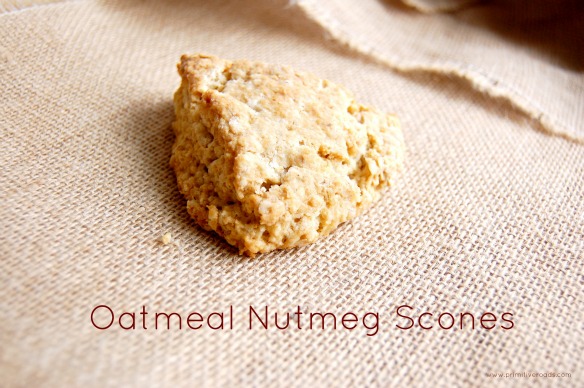
Oatmeal Nutmeg SconesDownton Abbey Season 3 is finally delighting US devotees and what better way to enjoy the Crawley family drama than with your own tea time.  Sunday evenings are the perfect time to brew a pot of Earl Grey, bake a batch of delicious Oatmeal Nutmeg Scones, and watch the story unfold.

Scones have earned a bad reputation for being high-maintenance, but don’t be intimidated by these pastries.  Even if you don’t have Mrs. Patmore and Daisy working their culinary magic in your kitchen, scones are well within your baking grasp.

Oat Scone

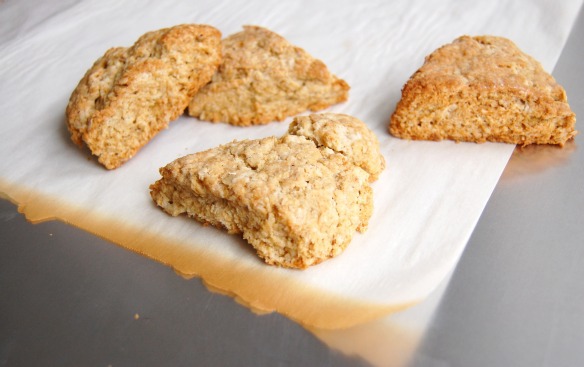
Up Close SconesDorie Greenspan is one of my favorite baking gurus.  For this simple, hearty scone, I adapted a recipe from Dorie’s cookbook Baking: From My Home To Yours.  Nutmeg is the perfect compliment to this buttermilk based scone.  Oats offer texture and depth to an otherwise light crumb.

I used brown sugar because the strong, caramel flavors taste wonderful with nutmeg.  If you can, use freshly grated nutmeg.

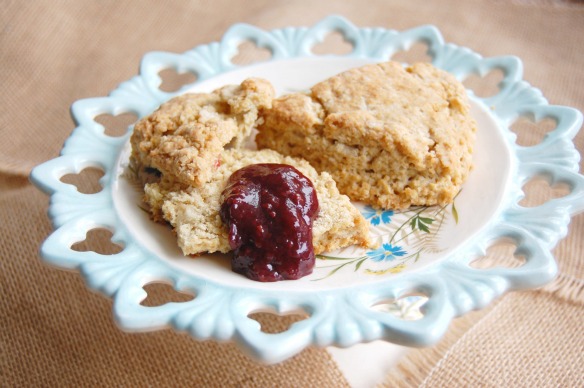
Scone plate

sconesUsing a food processor to cut in the butter takes much of the guess work out of scone making.  Add all the dry ingredients, give an initial mix, then add cubes of cold butter. Pulse until butter is pea sized and distributed throughout the dry ingredients.

Transfer mixture to a bowl and add liquid.  I had to add a bit more buttermilk to my dough to get the right consistency.  If your dough seems too dry, add liquid one tablespoon at a time. You will get lovely scones every time.

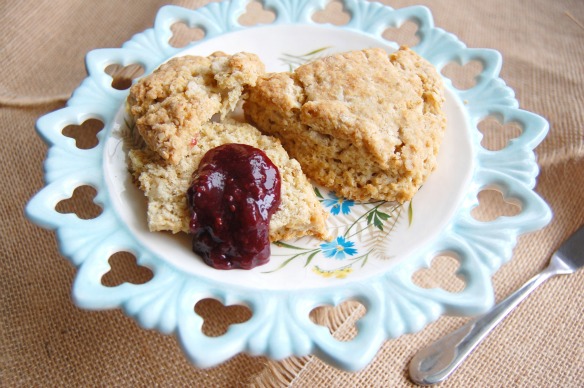
scone 2

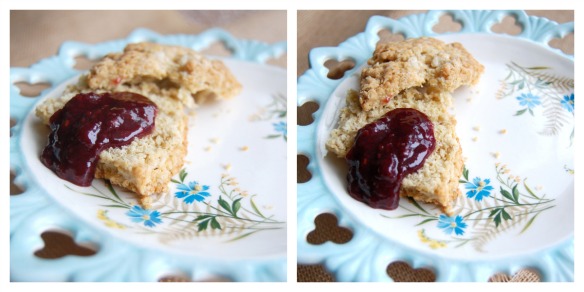
Serve scones with jam, lemon curd, or a pat of butter. So, even if Mr. Bates never makes it out of prison you can drown your tears in a warm Oatmeal Nutmeg Scone and the Dowager’s humor.

Oatmeal Nutmeg Scones 

adapted from Dorie Greenspan

A subtle sweetness compliments the earthy oatmeal texture. Try them with a slice of cheese or a dollop of raspberry preserves.

1 large egg

1/2 cup cold buttermilk

1 2/3 cups all-purpose flour

1 1/3 cups old-fashioned oats

1/3 cup brown sugar

1 tablespoon baking powder

1/2 teaspoon baking soda

1/2 teaspoon salt

1/4 teaspoon freshly grated nutmeg

1 stick plus 2 tablespoons (10 T) cold, unsalted butter, cut into small pieces

Preheat the oven to 400 degrees F. Line a baking sheet with parchment paper.

Whisk the egg and buttermilk together.  Set aside.

Put the flour, oats, sugar, baking powder, baking soda, salt, and nutmeg in the bowl of a food processor.  Pulse to combine.  Drop in the butter and pulse until the mixture is pebbly with pea sized pieces of butter. Pour the mixture into a large bowl.

If mixing by hand: Whisk the dry ingredients together in a large bowl. Drop in the butter and, using your fingers or a pastry blender, mix the butter into the dry ingredients until the mixture is pebbly.

Pour the egg and buttermilk mixture over the dry ingredients and stir with a fork just until the dough, which will be wet and sticky, comes together. Add buttermilk 1 tablespoon at a time if the dough isn’t coming together.

Gently knead the dough while still in the bowl, shaping it into a ball. Divide the ball in half and turn one half out onto a lightly floured surface.  Pat the dough into a rough circle that’s about 5 inches in diameter, cut it into 6 wedges and place on the baking sheet.  Repeat with the other half.

At this point, you can freeze the scones.  Add two minutes to baking time for frozen scones.

Bake for 20 to 22 minutes, or until their tops are golden and firmish.  Transfer them to a rack and cool for 10 minutes before serving.

Oatmeal Nutmeg Scone